Accessibility at Moorpark College
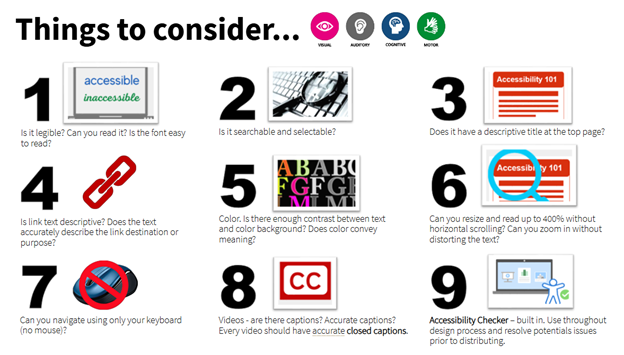
Accessibility is a shared responsibility and a core component of creating an inclusive and equitable learning environment for our campus community. Moorpark College is committed to ensuring all digital content (documents, emails, websites, videos, etc.) are accessible to everyone. By designing content with accessibility in mind from the start, we reduce barriers and ensure all students can fully participate in their learning and achieve their academic and career goals. This webpage provides practical guidance and tools to help us all create accessible digital content.
Why Accessibility Matters
Accessibility matters because it benefits everyone as well as ensures people with disabilities who use assistive technology can fully participate and thrive.
What is Digital accessibility?
Digital accessibility is about making online content usable for everyone. It's more than technical features or compliance checklists; it’s fundamentally about people’s diverse abilities and experiences. The digital content we create can either create barriers or remove them, but the goal is always to support the person — how they see, hear, move, think, and interact with the digital world. By creating clear, well-structured, and inclusive content, creators help remove barriers, making it easier for people to understand, navigate, and engage with what’s online.